Ending Child Maltreatment

Alice Munro’s story shows it’s time for a child protection revolution

Many lives were upended last year when Andrea, a woman in her late fifties publicly shared a long-suppressed testimony of a taboo violation. Aged 9 she traversed the logistics of parental separation by travelling across Canada to spend the summer with her mother. When summer was over, Andrea returned home to her dad and shared a secret with a sibling. Her mom’s new partner had molested her. Soon the whole household knew. Andrea’s dad forbade anyone confronting her mom or initiating action against the abuser, though he took measures to ensure it never happened again.

Sixteen years later, aged 25 Andrea finally told her mom. As feared, rather than showing empathy her mom primarily felt aggrieved by the partner’s betrayal.  She left him momentarily but soon returned.

Older abuse survivors would recognize this sequence of events as just the way things were done in the 1970s. It wasn’t until the mid-1980s the anglosphere found a vocabulary to discuss child sex abuse, despite it affecting one in five girls and eight percent of boys.

In 1984, sixty million Americans watched Ted Danson play an abusive father in  Something About Amelia, the first major television drama about child sex abuse. Helplines for child victims were swamped and soon publications like Newsweek ran their first ever cover stories on the theme.

Prime-time BBC in the UK broadcast a special called Childwatch in 1986. Britain’s most popular broadcaster, Dame Esther Rantzen, opened with a bombshell.

“Childwatch has undertaken one of the biggest national surveys into cruelty to children. Tragically, well over one million children in this country are suffering now because of cruelty . . . victims like Catherine who want today’s children to get the help and support she never had.”

Aghast viewers, who never heard anything like this before, saw the camera cut to a silhouetted woman describing childhood abuse she had never told anyone about. Rantzen spoke directly to children watching at home and told them if they were being abused, they weren’t alone, and it wasn’t their fault. Childwatch launched a helpline and just as with Something About Amelia in the US, the lines jammed after the broadcast.

This cultural shift turbo-charged policy. Child protection investments increased and barriers to reporting abuse were  removed. Annual US reporting of child abuse and neglect increased from 60,000 in the mid-seventies to two million by 1990. Population surveys showed increased reporting accompanied decreased abuse in the US and Canada. This taboo-busting revolution measurably improved millions of children’s lives, but the revolution is unfinished.

Andrea told her story soon after her mother had died at the age of 92 last summer. Her mother was author and Nobel Laureate Alice Munro and the lives upended were readers who made sense of their own lives growing up through Munro’s empathetic, relatable writing. It was a shock to the system.  As the US author Rebecca Makkai said of Munro’s indifference to her own daughter’s abuse“the revelations don’t just defile the artist, but the art itself”.

A Canadian colleague who has campaigned against child abuse globally asked ‘do you think it’s  still okay to read her writing?’ The public discourse was shaped by headlines like ‘global literary community is reeling from Munro’s failure to protect her daughter’. Readers couldn’t process a conflict between the empathy in Munro’s writing and the brutal dissociation and neglect that so harmed her daughter.

The revelation didn’t ignite public curiosity about the prevalence, impact and aggregated public costs of this type of trauma. Not just the sexual abuse itself, but how the absence of an attuned parent leaves a child vulnerable to harm.

The Buffer

The primary protection for a child from harm or exploitation is an attuned parent. Nine out of ten of the early UK Childline callers, whose stories of sexual abuse are recounted in Dame Esther Rantzen’s 2011 book Running Out of Tears, also suffered what we would describe today as emotional neglect from the non-abusing parent. They lacked a protective buffer. In the tenth case, the parent intervened immediately, confronted the abuser and soothed the child.

The taboo that was broken in the mid-80s was on child sexual abuse, an unambiguous criminal act with intent to harm the child. In 2025 we also know the damage done by other adverse childhood experiences too, including physical violence, emotional neglect, living with addicted parents or witnessing domestic violence. But we know the causes and solutions too and are the first generation in history to know how to prevent child maltreatment at scale.

.Child maltreatment doesn’t only happen in chaos and rage-filled homes or where poverty is present. More than half of adults experienced a potentially traumatic incident at home in childhood. Adverse Childhood Experiences (ACEs) studies from 37 diverse countries show 57% of us endured one of 10 listed categories of household violence, neglect or dysfunctional parenting. Around 15 per cent have an ‘ACE score’ of four or more. The prevalence is similar across countries, continents and even generations with similar ACE scores from those who grew up in the 1940s or 1990s. This entrenched endemic of child maltreatment is more prevalent than Covid at its height.

Yet it is hidden in plain sight, and for understandable reasons. Those affected live with internal shame, fear of external stigma and conflicting feelings of loving our parents and hating the pain they cause us. This scaffolding of silence is underpinned by myth: children should be seen and not heard (a license for neglect) and spare the rod spoil the child (a license for abuse)

It’s a costly problem to hide. The US Centre For Disease Control (CDC) measures the 40 most important health and wellbeing outcomes across every US state. The higher the ACE score, the worse the outcome on every measure.

 Data from Wales shows adults with high ACEs are four times likelier to be alcoholic or develop diabetes, 14 and  15 times more likely to be a victim or perpetrator of violence respectively and 20 times more likely to end up in prison. High-ACE teens are the type groomers, gangs, radicalizers, and drug pushers seek to recruit.

At a very conservative estimate, adult outcomes of adverse childhood experiences cost around 8% of GDP, trillions of dollars.

Most can rationalize a correlation between a Dickensian childhood and a life of addiction or crime, but how do we explain worse health and wellbeing outcomes?

When children experience anguish and fear, unbuffered by parents or teachers, they endure what Harvard scientists call toxic stress-the chronic elevation of the stress response system. This wreaks havoc on the fragile and evolving neurobiology of the child, leaving an imprint of trauma, low self-esteem and hyper-alertness to threat. Toxic stress in childhood derails normal human development and is especially dangerous if not addressed before adolescent brain development kicks off the riskiest phase in the human life cycle.

Emotional neglect is as harmful as physical abuse. Children have a biological need for a deep bond with a primary caregiver, its absence is terrifying. For children danger is not just the presence of violence, it is the absence of love. Often it happens because the parent is unwittingly just replicating what they experienced as children themselves  This is intergenerational trauma. But it is beatable.

If I saw the BBC Childwatch broadcast, it would have been through a shop window. I was 15 and living on the streets, having fled a violent UK inner city children’s home. Decades later and after some therapy and healing, I held our newborn son in a New York maternity ward. As I held him on my chest, his tiny head against my beating heart I knew what happened to me as a child was now unimaginable to myself. I would walk to the end of the earth for him to feel safe and loved. The inter-generational cycle ends with me. The more I held him, read, and sang with him, the further away that desolate children’s home and the torturous remnants of its memory felt. This is because love heals.  

But it begged a question: if I can end the cycle can everyone end it? Could we prevent it at scale? Many child development and public health thought leaders think we can.

Child Development Revolution

The former British Conservative party grandee and A-list podcaster Rory Stewart recently lamented that 21st century technology fails to drive positive human outcomes the way 20th century advances like piped water or vaccines had.

The best example of a 20th century breakthrough is the Child Survival Revolution. In 1980 American epidemiologist Dr John Rohde wrote a paper arguing 14 million children die annually due to three problems already solved in the industrialised world. 1) Children were not vaccinated against major diseases 2) Families couldn’t access oral rehydration solution for acute childhood diarrhoea and 3) Early nutrition wasn’t protected by breastfeeding promotion or routine growth monitoring.

If governments sharply focussed on universalizing these three interventions, child deaths would plummet.

Despite acute cold-war polarisation, disparate governments coalesced on saving children’s lives. Prime ministers and royals, health systems and village doctors joined the world’s biggest ever public health campaign. Vaccine coverage of under-fives leapt from 15% to 80% in a decade and soon child mortality was halved. Today millions of children live each year because of the Child Survival Revolution, perhaps modern humanity’s greatest accomplishment.

But it almost didn’t happen. Opposition and scepticism were prolific. All the 20th century advances Stweart celebrated were once harebrained, unimaginable dreams. In a Growth A History and a Reckoning, Daniel Susskind reminds us even the concept of measurable economic growth driving our modern political economy and culture, was unimaginable for 99% of human history. Tap water, antibiotics and road safety were all nuts’ ideas once.

Ending child maltreatment is not just a challenge for the global south, it’s universal and may seem insurmountable at a moment when we are more polarised than ever and our ability to focus is battered in an attention economy. Bur the world needs a new idea to build shared purpose. Reformed polarizer and pollster Frank Luntz argues the only cause with potential to de-polarize politics is children. Bipartisan interest from JD Vance to Gavin Newsom in the costs and prevalence of ACEs suggest we are ready for a new child revolution. Like many public health campaign, it needs three components: Prevent transmission, treat those affected and ensure everyone is aware of the risk

Primary Prevention

Scientists at Oxford and World Health Organisation recently completed a study potentially as impactful for child development, as John Rohde’s paper for survival. They rigorously reviewed evidence-based parenting programs delivered through home visits or group sessions to build parenting skills and knowledge. The home visitor doesn’t impose or judge the parent. If the parent has strong attachment and development skills already, the home visitor builds off these strengths.They assessed 435 trials from 65 countries and found improved outcomes in responsive caregiving, maltreatment reduction, learning and behaviour.

The review also found a telling, unintended benefit of the programmes. An improvement in parental mental health. One of the explanations is when parents can bond with their child, as I did with my son, the emerging relationship is reciprocal and healing. Anyone returning home from a stressful day with a horrible boss or client and soothed holding their child know this. Again, love heals.

When we had our son, there was no parenting program offered. In any given year there are over 600,000 babies born in the state of New York. According to the National Home Visiting Service, only 14,000 receive home visits yet 63% of children in the State have at least one ACE. Home visits need to be universally available and supported by decent parental-leave and perinatal health care as pre-requisites for primary prevention.

The Antidote

When children feel unsafe or unloved at home, the next best hope is an attuned teacher. We now know that healthy relationships are the antidote to toxic stress.    They literally de-activate the stress response system. Extensive research shows healthy relationships with teachers are the leading driver of good learning outcomes for all children. For vulnerable children they provide a layer of protection as a foundation for healing and learning. I would not be here today writing this if it wasn’t for a teacher Jan Rapport, who eventually helped me see a pathway to a better future.

One of the world’s leading authorities on child development, Professor Peter Fonagy describes this as epistemic trust. As a lone refugee child from Hungary in 1960s London, Professor Fonagy recalls how the simple act of his teacher gifting a book to each child in the class was transformative in helping him cope with the trauma and focus on his studies:

She gave them out randomly. But, at the same time, we all felt recognized by her. We all felt that she treated us as individuals, and we all had our minds wide open to her.”

Can we systemise healthy relationships in school without overburdening already stressed teachers?  Educationalists at Harvard developed a simple approach for school authorities called Relationship Mapping. Every teacher in a school goes through the register and puts a yellow dot next to a child they know has healthy relationships. The school then intentionally works with children who have no yellow dots at all to link them up to healthy relationships. The goal is for  no child to be unseen. It’s not rocket science, but it is brain science. The absence of healthy adult relationships is the major risk factor for teens.

Ensuring every child has healthy teacher relationships should start in pre-school as the child’s brain development and sense of self and the world is growing most rapidly. If we are serious about preventing risk, it should be especially robust as children enter adolescence. For children with acute vulnerability, we need well-resourced, high quality social work and mental health support.

Awareness

The earliest research on attachment had a key finding. Parents who were able to process and understand the trauma they had experienced as children were less likely to transmit it to their own children.

I thought about at this at the third birthday party for one of our son’s pre-school classmates. As our children bounced up and down in unison to Baby Shark, a group of dads discussed modern parenting when one chuckled

“I love my parents, but no way am I giving my kids the trauma they gave me!”

It wasn’t a heavy conversation, everyone laughed and agreed. But that conversation wouldn’t have happened a generation ago. Evidence based parenting apps and books on nurturing care, child development and trauma are devoured by an educated minority.   It wouldn’t take much to make that knowledge universally available, so everyone is aware of the risks of child trauma the way we are aware of Covid, HIV or smoking. Through public awareness campaigns that ensure a conversation in every communityand mainstreaming mental health and child development in schools, we can provide the vocabulary and understanding to prevent transmission of child trauma.

Making these three interventions universally available to parents, school and children everywhere would cost a fraction of the trillions we lose globally each year to the negative outcomes of child maltreatment.   It is not enough to be the first generation in history to know the causes and solutions to child trauma we need to be the last to accept it as intractable or insurmountable. 

Every major gain in child protection over the past decades has come after a shocking public revelation or tragedy. It would be a fitting tribute to Andrea’s courage to harness the shockwaves her testimony caused to ignite a child protection revolution that ensures every child grows up safe and loved.

Benjamin Perks book Trauma Proof: Healing, Attachment and the Science of Prevention is out in North America here and in the UK and Commonwealth here

Don’t Politicize Grooming, Eradicate It.

Photo credit: UNICEF Srbija/ Bicanski

Manhattan magnates like Epstein or cabbie cartels in Yorkshire know their pray. They scour the same blind spots that drug dealers and violent extremist do. They seek out teenagers either without parental care or living in emotionally fragile families that can’t protect them. Predators act on instinct, but there is a science to what they do. Children who feel unloved or unsafe become teenagers afflicted with toxic stress, hyper-alertness, and low self-esteem. The period of adolescence heightens risk for all, but for a teen growing with emotional poverty or violence, that risk is explosive.

Passed unwittingly and automatically across generations, this trauma is not new. It is an endemic disease that has always been there, and for 99% of human history, hidden in plain sight. To varying degrees, it affects more than half of children and is a preventable driver of mental illness, addiction, obesity, loneliness and non-communicable disease. At a conservative estimate, outcomes of child trauma cost 8% of global GDP. Yet there is cause for optimism. We are the first generation in history to know its causes, commonality and costs. And the first to know how to end it, and for a fraction of the money lost in trauma’s long-term health and social costs.

Firstly we need to cut off the supply line by strengthening the primary and secondary attachments as the two main protective factors for any child.

When parents get simple, non-judgmental guidance and support in basic parenting skills from a home visitor or support group-the automatic transmission is disrupted and the outcomes for the child improve dramatically. The mental health and wellbeing of the parent improves too. We need to make parenting programs universally available likes vaccines or school.

Attachments in school are an essential buffer for children too. As many of us will attest, an attuned teacher can make all the difference for a vulnerable child. Robust research shows positive relationships with teachers also boost learning outcomes for all children. We need to ensure every child is safe, seen, and soothed in school. This needs to happen early-as the brain as the child’s sense of self and the world is formed. This needs to be start with universal pre-school from 3-6.

Empowered parents and attuned teachers can sever the supply line to exploitation groups. Children who fall through the cracks must be served by adequately resourced, agile social workers who respond to the unique needs of each child and intelligence-led policing and justice systems that are ruthless on predators and empathetic to children.

Grooming is not an insurmountable problem. We can end it.

Benjamin perks new book Trauma Proof is available here in the UK and most countries now and in North America from 8th April: https://bit.ly/3W4XoDJ

The Ghislaine Maxwell Story Must Be About The Victims.

The media noise of the Ghislaine Maxwell trial drowned out victim’s voices. The ‘socialite’s’ fall eclipsed the pain of lives devastated by organised criminal exploitation. Ghislaine Maxwell was found, through due process, to be a groomer and trafficker of vulnerable children.

What does it do to the life of a young teenager to be groomed for exploitation? Groomers have a laser-focused recruitment strategy. They identify, target and exploit the most vulnerable children and young people. Children who are already in pain. Those who feel unloved or unworthy. Those already affected by violence. Girls without a reliable adult to call for advice on an offer of a trip or friendship from an older stranger. Groomers take broken lives and break them further. They are ruthless and heartless.

Our society lacks both understanding of the grooming process and compassion for the victims. The victims evoke misogyny and class prejudice. That prejudice prevents or delays prosecution. Trauma, the lapsed time and absence of witnesses to sex crimes means testimonies can be inconsistent. Former Public Prosecutor for North- West England Nazir Afzal said that inconsistency itself is a sign of the authenticity of the testimony.

From a base of vulnerability, the victims show heroic tenacity in fighting their case. Defence lawyers try to denigrate their character. The strategy is to brazenly play into public prejudice and re-traumatize the victims. The use of a ‘false testimony’ expert was rightfully dismissed by the judge and jury at the Maxwell trial. Do we as a society believe allowing defence lawyers to roast traumatised victims of historic child sex abuse is a pathway to a fair hearing? Is it in the public interest? Does it serve justice?

Maxwell’s defence team requested a retrial on finding a juror mentioned lived experience of child abuse during jury deliberations-as if this was an outlier. According to CDC population surveillance data, between 11 and 20% of adults experienced sexual abuse as children. Data from the Council of Europe shows 1 in 5 European adults experienced sexual abuse as children. Tragically, child sex abuse is not marginal it is mainstream. A jury that did not include survivors of abuse would in itself be an anomaly-and arguably itself an injustice for a trial on organised sexual abuse.

The 2021 prosecution of Ghislaine Maxwell is rare and hopeful. Before Nazir Afzal re-opened a case against grooming gangs in Rochdale in England they had abused an estimated 1400 children with impunity between 1997 and 2013. Hundreds of complaints of systematic abuse were met with fear, incompetence and misguided politics. The eventual successful prosecution was a game-changing breakthrough.

Where do we go from here? Investigate those implicated in this case without fear or favour, regardless of how powerful they are. Turbo-charge the capacity of justice and police systems to detect, disrupt and destroy grooming gangs whether managed by Rochdale roughnecks or Manhattan socialites. Beyond that we need to address vulnerability. The first line of defence is family, friends and community. Investment in services that support families and communities to protect children and help them flourish. This enriches our society and yields an unrivaled return on public investment.

The case in Rochdale was a pre-cursor for the #MeToo movement in the UK. #MeToo later exposed widespread sexual violence against women and girls everywhere. It networked victims and activists to dismantle the structural inequalities and barriers that protect perpetrators and bring them to justice. We can build on that by scaling up action to prosecute the organised gangs that so ruthlessly exploit our most vulnerable children and young people.

Do the Academy Awards Point to an Awakening on Adversity?

I am unbearable company during the Oscars. Like most US-based Brits I can’t help but do football stadium style cheering every time someone from the UK wins anything. Worse still I can’t watch films like Judy or Rocketman without analysing the”underlying messages” on insecure attachment. Nor can I enjoy The Joker, Harriet or Honeyland without giving a droning commentary on how toxic stress ruins lives. The invitations are drying up.

In case you are not clued up on the lingo: Insecure attachment is the term used to describe how poor early parental attachment undermines our ability to form healthy and nourishing relationships . Toxic stress is when prolonged childhood trauma chronically activates our stress response systems. Robust recent research now shows how people with either do worse in education, employment, physical and mental health and inter-personal relations throughout life.

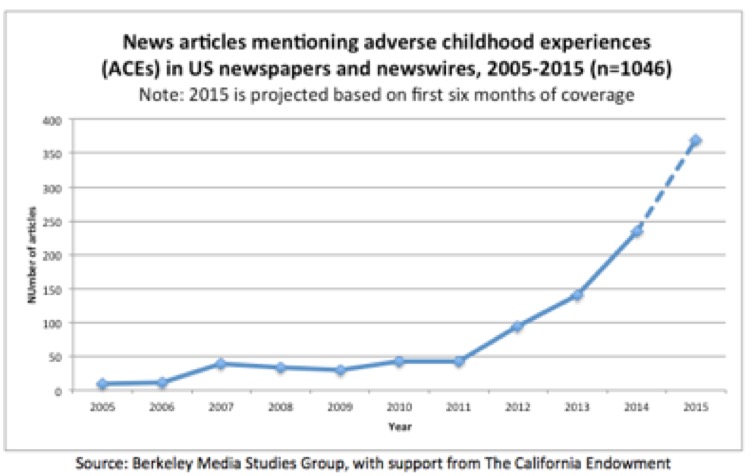
From a rough estimate, about a quarter of 2020 Oscar nominee productions feature a story line with the following formula: Child trauma minus healing/soothing relationships = train wreck adulthoods. Does the proliferation of these story lines in films mean our recognition of the link between early trauma and poor life outcomes ? It is not just happening in Hollywood. In the sober UK BBC Question Time a couple of weeks ago. Decorated former Police Chief Mike Barton told a studio audience that we can only reverse the London drug and crime problem if we address adverse childhood experiences (ACEs). Research in the USA shows how media coverage on the theme has dramatically increased in recent years.

Our shared narratives should never be deterministic about the pathway from childhood trauma to adult dysfunction. Sometimes those with high childhood adversity flourish. But the most recent evidence suggests those with higher levels of trauma are much more likely to have poorer life outcomes. As Mike Barton may concur, they are the ones most likely to be targeted by criminals, groomers and radicalisers alike. As the US Centre for Disease Control has shown, they are also do much worse on almost every health and wellbeing indicator. The costs are huge and quantifiable. The UK Based Overseas Development Institute modestly estimated that violence against children alone (excluding the devastating global costs of child neglect) cost 8% of GDP. Conversely Nobel Prize winning economist James Heckman argues that if we invest in prevention in the very beginning of childhood-the return on investment through life is up to 13-fold.

Film scripts don’t always end with trauma. They can also inspire us with recovery and resilience. Gus van Sant’s Good Will Hunting had nine Oscar nominations and won two and is one of America’s most popular films. It is perhaps the most compelling cinematic representation of how a young adult overcomes debilitating childhood trauma through connection with an empathetic witness . When the film was made, recovery through connection was only a common sense proposition. Now that proposition is firmly backed up by science base. Human connection and a sense of belonging in family, school or community provides a buffer against toxic stress. It calms the stress response system and helps rebuild the attachment model. It enables the child to build the resilience to navigate future shocks and see a lifeline to a better future. We call this science of resilience.

The opposite of Good Will Hunting’s story of recovery is the inter-generational emotional neglect suffered and transmitted by Elton John’s father in RocketMan. Deep in middle age he sings: “I can’t love, shot full of holes, I don’t feel nothing, I just feel cold“. At the extreme end of this spectrum is the character played by Joachim Pheonix in The Joker. Severe childhood trauma with no empathetic witness on the path to adulthood is costly for the individual, their family and society as a whole.

Film and literature critics often tell us that fine writing gives a tangible narrative to feelings the viewer or reader has, but could never put into words. The research shows that between 50 and 80% of any given population have experienced one ACE and between 10 and 20% have experienced 4 or more. Everyone, everywhere is affected by childhood adversity. We don’t talk about it easily. We could assume it has been taboo for most of human history. But if we are not affected by it directly, our spouse, neighbour or colleague is. It is often manifested in their decisions and behaviour. It’s why we identify so much with these stories. It’s one of the reasons Good Will Hunting is held in such affection and why so much of our popular culture alludes to this theme. This is our story. Our broken childhoods and our struggle to overcome them are a central theme of human existence and spirit. But a marginal theme within our national and international conversations. Could that be changing?

From an advocacy perspective I hope so. More public openness to the theme could drive the political will and public demand needed. A good public policy start would be investment in 3 things. Trauma prevention though early parent outreach and support. Recovery and resilience through trauma-informed communities and schools. Open and taboo-busting public discussion on adverse childhood experiences. These interventions could close the costly gap between what we know and the policies we do. Imagine how much trouble could have been prevented if Gotham City had had better childhood policies. In Pinner and Philadelphia too.

And that brings us back to Elton and his Oscar nominated recovery anthem: “Find the wind to fill my sails, Rise above the broken rails, Unbound by any ties that break or bend, I’m gonna love me again” How rich our world would be with an opportunity for everyone to rise above those broken rails.

The Networking of Trauma

Preventing Organised Crime and Other Exploitation Groups Preying on Vulnerable Children

Violent extremists, gangsters and groomers have a simple recruitment strategy. They network trauma. They can spot a vulnerable teenager from 1000 yards. It can be easy to pull them in by sating a desire for belonging or through initial kindness. But the intention eventually is always exploitation.

An Irish security expert once shared three observations about the Northern Ireland conflict. Firstly that at any given moment during the conflict, there were only ever a few dozen people who could actually kill someone. Secondly that they usually came from traumatic homes with fathers who had also killed. He concluded that it seemed political extremists and organised criminals knew exactly how to identify and recruit such people. I have seen similar recruitment strategies in lawless or conflict-affected countries from Afghanistan to Bosnia. It always has devastating consequences.

It’s not black and white. There are economic and structural determinants of violence too. Most people affected by childhood trauma do not turn to crime or violence. But the world is waking up to the impact of childhood trauma as a driver of recurring violence. It occurs in cycles. Data from Wales show that adults affected by chronic childhood trauma were respectively 14, 15 and 16 times more likely to be a victim or perpetrator of violence or use crack cocaine than others. Data on consequences of chronic childhood trauma is similar across continents

There is an underpinning neurobiology to this cycle. Children are dependent on a strong attachment with a parent. If the attachment is absent due to neglect or violence, a child will see it as a serious threat. That threat chronically activates the stress response system. It distorts the way they perceive danger, they way they see themselves as well as their attachments to others. If families, schools or communities cannot provide soothing connections to heal the trauma, the child enters adolescence and adulthood with unresolved chronic trauma. This leaves them extremely vulnerable to exploitation and with limited prospects for learning or finding a lifeline to a better future.

All of this leads to an obvious question for anyone reading this blog. In my neighbourhood are there more forces trying to exploit or trying to prevent the inter-generational cycle of violence? Prevention services, usually delivered through the health system help new parents develop a secure attachment with their child. That attachment is the best weapon against neglect and violence. it can help heal the parent at the same time as protecting the child. In an ideal world these services would be provided globally. As noted elsewhere this type of prevention provides the greatest return on investment for the public purse. No other intervention does more to prevent poor life outcomes including in mental and physical health, crime and productivity.

Response services provide a second chance to children who have already been traumatised. In Trauma-informed schools for example, the teacher creates a calming environment and a caring connection. This ensures every child in school is safe, seen, secure….and most importantly soothed. The four Ss feature in the excellent “The Whole Brained Child” by Daniel Siegel and Tina Payne Bryson. In a Trauma-informed school, the teacher makes the child feel they matter as an individual. Many who come from traumatic childhoods have been rescued by a teacher who did exactly that. Positive relationships and connections build resilience that help teenagers navigate away from poor decisions that bring bad life outcomes. And if a child is approached by a Fagin type exploitation group, they feel they can tell the teacher

A second important question is what is being done in my neighbourhood to prevent the cynical “networking of trauma” by exploitation groups.

Both in the UK and the US, Trauma-informed practice is also being adapted to policing and justice sectors. One of my favourite champions of this is Detective Superintendent Stan Gilmore of Thames Valley Police in the UK. He observed those arrested for “County-Lines” drug trafficking were almost always in their mid teens. He started to see them as much as exploited and vulnerable youngsters as offenders . Instead of pursuing a custodial sentence, the emphasis was placed upon diversion from a potential life-cycle of crime. This included curfews and supervision orders that stopped the gangsters reaching the child . It cut off their source. It also referred the child to services to help address the underlying trauma. The whole approach switches the question to the child from “What did you do?” to “What happened to you?

To me this is intelligent and effective policing. It recognises that the foundations of organised crime are built on networking trauma and vulnerability and if you prevent that networking, you can break the cycle. Childhood trauma is not an excuse for crime, but to effectively reduce crime we need to be trauma-informed.

Just imagine how societies would flourish if we not only prevented the networking of trauma by exploitation groups, but also prevented or mitigated the trauma itself. We now have enough evidence and knowledge to work towards this goal. We just need the political will and the resources

.

“What You Have Been and Still are for Me”

The Power of Teaching

I have a favourite teacher story and it goes like this. As a child, Albert Camus was asked by his impoverished single mother to quit school and start work. Camus’s teacher visited the family home and convinced her to let young Albert continue his education. The teacher’s name was Louis Germain.

Albert Camus went on to become one of the 20th centuries most important novelists. Many decades after leaving school and upon being awarded a Nobel Prize for Literature, Albert Camus wrote a letter to Mr Germain entitled “What You Have Been and Still are for Me”. He wrote “Without you, without the affectionate hand you extended to the small poor child that I was, without your teaching and example, none of all this would have happened.”

How many of us have life journeys that are profoundly enriched and transformed by the hand of a teacher? Sometimes as children we carry the weight of the world on our shoulders through poverty, abuse or neglect. In all of that fragility and wrenching pain, it often takes a teacher to make us believe we matter and to unlock the opportunities to exercise curiosity, collaboration and cultivate character

Two thirds of us have had teachers who made a difference in our lives, according to research from Harvard Graduate School of Education. Yet the research also shows that these teachers are outliers in their own school settings. Even the university professors who produce the most impactful teachers are outliers in their faculties. Our education systems do not incentivise modern-day Mr Germains at all

The research now shows what common sense should have always told us. children only learn from teachers they love. We once saw reasoning as being the opposite to emotion, but neuroscience tells us something different. It is only through a deep network of relationships, belonging and collaboration in school and life that we can have an ecosystem for learning. To motivate and organise ourselves for learning, we have to engage the emotions. Emotions are not compartmentalised in a different part of our brain while we deploy rationality and reason to absorb facts.

In any given classroom of 25 children, at least 4 or 5 may experience multiple forms of severe trauma at home. Such trauma chronically activates their stress response system. This doesn’t switch off when they enter the classroom.   An attuned teacher in a trauma-informed classroom can soothe the stress response system. They can help the child to learn, trust, connect and build resilience and attachment. And here is where the healing, and therefore the ability to learn, begins. Trauma-informed schooling is potentially one of the most impactful strategies for reducing child trauma in general. 

A few years ago attended a lecture by Harvard Professor Tony Wagner on outlier teachers who help kids recover from a broken start . It inspired me to track down a teacher who had transformed my life. At 15 I lived in state care in an inner-city area blighted by drugs and crime. I had been kicked out of three schools and had wound up in an education centre for those at the very end of the line. In every sense, my life prospects were incredibly bleak.

Jan Rapport was an idealistic teacher working in the most difficult of education settings. She gave me a chance. She is the only adult I could remember having a real conversation with during my entire childhood. She instilled in me a lifelong passion for learning and particularly for literature. My imagination soared and I began to see a different path forward. I now know, it was probably the calming attachment and connection, the relationship itself that made the most difference.

When I the school at 16, I lost contact with her. When I finally found Ms Rapport over 25 years later there was so much to talk about that we didn’t really know where to begin. She was now a pensioner and I was well….er…middle aged. We caught up on what we had done with our lives. Nobody expects someone from my background to have a job in the UN, though somehow she thought I would turn out okay. I needed to tell her that she saved me-that I would not be here and I wouldn’t have done all of this without her. I didn’t have any words in my vocabulary that could adequately convey how grateful I am. I was in awe to look into the eyes of this person who saw things in me that I did not see in myself and helped me beat a pathway to places I could have never imagined. A teacher. The power of a teacher.

It is often said that when you are teacher you don’t know where you legacy will end. Louis German commitment stayed with Albert Camus through his life. A part of it passed onto to others through his work, friendships and family. Imagine if we could deliver a global legacy on teaching. If we could take what inspirational, life-changing teachers have and dispense it through entire teaching workforces. Every teacher emotionally present for children. Every child made to feel like they belong and matter as an individual. Every school dedicated to learning, curiosity and trauma-informed healing. We could and we should celebrate the power of teaching and harness it to touch the lives of every child.


Equity, poverty and love

InsiderBy Benjamin Perks18 November 2015

UNICEF/NYHQ/HartleyA young girl from girl from the Roma ethnic group stands in a field near the town of Podgorica in Montenegro. 

“…….seeking but a moment’s rest among the long-forgotten haunts of childhood, and the resorts of yesterday; and dimly finding fear and horror everywhere….” [1]
–Charles Dickens  Martin Chuzzlewit  London,1843

Everyone knows poverty drives inequity. Here in Montenegro one of the ways we address this is by supporting dramatic expansion of pre-school education for the poorest 3-6year olds, who are currently 10 times less likely to attend which ensures worse life prospects and an inter-generational cycle of poverty.

But is childhood adversity: violence, neglect and dysfunctional parenting, also a driver of inequity?

152 years passed between Dicken’s writing Martin Chuzzlewit and the discovery of a neurobiological explanation of how and why broken childhoods haunt and destroy adult lives-even into old age.

The Adverse Childhood Experience (ACE) study, launched in 1995, continues to demonstrate in many countries huge inequity between adults who were affected by high levels of child abuse, neglect or dysfunctional parenting, and those who were not. High childhood adversity leads to markedly worse outcomes in health, education, employment and crime. It is much more prevalent than we thought and occurs across wealth quintiles.

In addition to being one of the world’s finest novelists, Charles Dickens also gave an authentic voice to those whose childhoods had been pulled apart by the desolate loneliness and crushing injustice of childhood adversity and inequity as he had experienced first-hand himself [2]. As with Dickens, the passion of many UNICEF staff to tackle childhood inequity stems from our own childhood memories and in my case the experience of growing up in loveless institutional children’s homes has always been a major driver of my work.

At any given time across the region of CEE/CIS we have a million children in state care, a fact that will place them on a lifelong path of inequity.They come into state care because of childhood adversity or because they are abandoned, mainly into large-scale children’s homes. A placement in a children’s home is a secondary trauma for any child. It does not provide healthy attachment with an adult and this is particularly catastrophic for children under 5 when brain development is most active and dependent on consistent interaction with an adult.

Comparative brains scans as well as measurements of development-inhibiting cortisol levels between those in institutional care and those in strong families reveal a neurobiological inequity that will eventually translate into long term economic and social inequity.

A children’s home is a place where a child lives in a state of neglect – unequal not just in terms of poverty, but in terms of love, affection and attention. This is why 21 countries in our region have joined forces with the UN Human Rights Commission and UNICEF to eradicate placement of children under 3 in large scale institutions. In Montenegro there will be a complete end to placement of under 3s in state care by 2017. There is a similar campaign in Latin America where around 240,000 children live in state care.

The right to family life is being secured through stronger social work systems, which can keep families together, and promotion of fostering and other family based alternatives for children who cannot be cared for in the biological family. This has already yielded a 40% decrease in the number of children in institutional care in the past five years in Montenegro.

Children in state care are just the tip of the childhood adversity iceberg, the overwhelming majority of childhood adversity is suffered by children in families. We are thus working with health, education, justice and social work sectors to build systems which protect children and promote better parenting through pregnancy until adulthood. We work with government and women’s groups to break the taboo on childhood adversity-learning the lessons from similar efforts in the UK and Scandinavia a couple of decades ago. I recently did a TedX talk on this & was inundated with messages from Montenegrin adults who had been affected by childhood adversity and many had never told anybody. We launched the first study on child abuse in the parliament recently and next year we will launch and measure the impact of a public campaign on childhood violence and adversity. The aim is to reduce the space in which adversity is unreportable and invisible or even acceptable.

But how can we close the equity gap for adolescents whose lives have already been plagued by adversity?

Neuroscience may have taught us the bad news that when childhood adversity collides with adolescent brain development-it can put children on a lifelong negative trajectory : inequity, gangs, violence, but it has also taught us that the character and decision making skills required to prevent such a trajectory can be learnt thoughout childhood: grit, optimism, integrity and self-control for example . In collaboration with the Government, Birmingham University and ING, we are working with youngsters who have experienced high levels of adversity to teach these characteristics. We hope that this will help them to make better decisions , get back on track and close the equity gap between them and children from more stable backgrounds.

As international civil servants it is easier to talk about poverty than it is to talk about love. When we talk about adverse childhood experiences we are talking about love, a lack of love, or children being violated by those who should love them. We need to find ways of talking about childhood adversity as a major driver of inequity-despite the discomfort.

I would never want to lose sense of who I am and where I come from. Every month I join a group of young people who grew up in children’s homes in Montenegro and help them draw out their own potential to build better material and emotional future.  I see my own reflection in their eyes and hope they will have a better tomorrow.

[1] Dickens, C. The Life and Adventures of Martin Chuzzlewit (1843), Chap. 25

[2] Tomalain C. Charles Dickens A Life 2011 Viking

Benjamin Perks is the UNICEF Representative in Montenegro