Ending Child Maltreatment

Alice Munro’s story shows it’s time for a child protection revolution

Many lives were upended last year when Andrea, a woman in her late fifties publicly shared a long-suppressed testimony of a taboo violation. Aged 9 she traversed the logistics of parental separation by travelling across Canada to spend the summer with her mother. When summer was over, Andrea returned home to her dad and shared a secret with a sibling. Her mom’s new partner had molested her. Soon the whole household knew. Andrea’s dad forbade anyone confronting her mom or initiating action against the abuser, though he took measures to ensure it never happened again.

Sixteen years later, aged 25 Andrea finally told her mom. As feared, rather than showing empathy her mom primarily felt aggrieved by the partner’s betrayal.  She left him momentarily but soon returned.

Older abuse survivors would recognize this sequence of events as just the way things were done in the 1970s. It wasn’t until the mid-1980s the anglosphere found a vocabulary to discuss child sex abuse, despite it affecting one in five girls and eight percent of boys.

In 1984, sixty million Americans watched Ted Danson play an abusive father in  Something About Amelia, the first major television drama about child sex abuse. Helplines for child victims were swamped and soon publications like Newsweek ran their first ever cover stories on the theme.

Prime-time BBC in the UK broadcast a special called Childwatch in 1986. Britain’s most popular broadcaster, Dame Esther Rantzen, opened with a bombshell.

“Childwatch has undertaken one of the biggest national surveys into cruelty to children. Tragically, well over one million children in this country are suffering now because of cruelty . . . victims like Catherine who want today’s children to get the help and support she never had.”

Aghast viewers, who never heard anything like this before, saw the camera cut to a silhouetted woman describing childhood abuse she had never told anyone about. Rantzen spoke directly to children watching at home and told them if they were being abused, they weren’t alone, and it wasn’t their fault. Childwatch launched a helpline and just as with Something About Amelia in the US, the lines jammed after the broadcast.

This cultural shift turbo-charged policy. Child protection investments increased and barriers to reporting abuse were  removed. Annual US reporting of child abuse and neglect increased from 60,000 in the mid-seventies to two million by 1990. Population surveys showed increased reporting accompanied decreased abuse in the US and Canada. This taboo-busting revolution measurably improved millions of children’s lives, but the revolution is unfinished.

Andrea told her story soon after her mother had died at the age of 92 last summer. Her mother was author and Nobel Laureate Alice Munro and the lives upended were readers who made sense of their own lives growing up through Munro’s empathetic, relatable writing. It was a shock to the system.  As the US author Rebecca Makkai said of Munro’s indifference to her own daughter’s abuse“the revelations don’t just defile the artist, but the art itself”.

A Canadian colleague who has campaigned against child abuse globally asked ‘do you think it’s  still okay to read her writing?’ The public discourse was shaped by headlines like ‘global literary community is reeling from Munro’s failure to protect her daughter’. Readers couldn’t process a conflict between the empathy in Munro’s writing and the brutal dissociation and neglect that so harmed her daughter.

The revelation didn’t ignite public curiosity about the prevalence, impact and aggregated public costs of this type of trauma. Not just the sexual abuse itself, but how the absence of an attuned parent leaves a child vulnerable to harm.

The Buffer

The primary protection for a child from harm or exploitation is an attuned parent. Nine out of ten of the early UK Childline callers, whose stories of sexual abuse are recounted in Dame Esther Rantzen’s 2011 book Running Out of Tears, also suffered what we would describe today as emotional neglect from the non-abusing parent. They lacked a protective buffer. In the tenth case, the parent intervened immediately, confronted the abuser and soothed the child.

The taboo that was broken in the mid-80s was on child sexual abuse, an unambiguous criminal act with intent to harm the child. In 2025 we also know the damage done by other adverse childhood experiences too, including physical violence, emotional neglect, living with addicted parents or witnessing domestic violence. But we know the causes and solutions too and are the first generation in history to know how to prevent child maltreatment at scale.

.Child maltreatment doesn’t only happen in chaos and rage-filled homes or where poverty is present. More than half of adults experienced a potentially traumatic incident at home in childhood. Adverse Childhood Experiences (ACEs) studies from 37 diverse countries show 57% of us endured one of 10 listed categories of household violence, neglect or dysfunctional parenting. Around 15 per cent have an ‘ACE score’ of four or more. The prevalence is similar across countries, continents and even generations with similar ACE scores from those who grew up in the 1940s or 1990s. This entrenched endemic of child maltreatment is more prevalent than Covid at its height.

Yet it is hidden in plain sight, and for understandable reasons. Those affected live with internal shame, fear of external stigma and conflicting feelings of loving our parents and hating the pain they cause us. This scaffolding of silence is underpinned by myth: children should be seen and not heard (a license for neglect) and spare the rod spoil the child (a license for abuse)

It’s a costly problem to hide. The US Centre For Disease Control (CDC) measures the 40 most important health and wellbeing outcomes across every US state. The higher the ACE score, the worse the outcome on every measure.

 Data from Wales shows adults with high ACEs are four times likelier to be alcoholic or develop diabetes, 14 and  15 times more likely to be a victim or perpetrator of violence respectively and 20 times more likely to end up in prison. High-ACE teens are the type groomers, gangs, radicalizers, and drug pushers seek to recruit.

At a very conservative estimate, adult outcomes of adverse childhood experiences cost around 8% of GDP, trillions of dollars.

Most can rationalize a correlation between a Dickensian childhood and a life of addiction or crime, but how do we explain worse health and wellbeing outcomes?

When children experience anguish and fear, unbuffered by parents or teachers, they endure what Harvard scientists call toxic stress-the chronic elevation of the stress response system. This wreaks havoc on the fragile and evolving neurobiology of the child, leaving an imprint of trauma, low self-esteem and hyper-alertness to threat. Toxic stress in childhood derails normal human development and is especially dangerous if not addressed before adolescent brain development kicks off the riskiest phase in the human life cycle.

Emotional neglect is as harmful as physical abuse. Children have a biological need for a deep bond with a primary caregiver, its absence is terrifying. For children danger is not just the presence of violence, it is the absence of love. Often it happens because the parent is unwittingly just replicating what they experienced as children themselves  This is intergenerational trauma. But it is beatable.

If I saw the BBC Childwatch broadcast, it would have been through a shop window. I was 15 and living on the streets, having fled a violent UK inner city children’s home. Decades later and after some therapy and healing, I held our newborn son in a New York maternity ward. As I held him on my chest, his tiny head against my beating heart I knew what happened to me as a child was now unimaginable to myself. I would walk to the end of the earth for him to feel safe and loved. The inter-generational cycle ends with me. The more I held him, read, and sang with him, the further away that desolate children’s home and the torturous remnants of its memory felt. This is because love heals.  

But it begged a question: if I can end the cycle can everyone end it? Could we prevent it at scale? Many child development and public health thought leaders think we can.

Child Development Revolution

The former British Conservative party grandee and A-list podcaster Rory Stewart recently lamented that 21st century technology fails to drive positive human outcomes the way 20th century advances like piped water or vaccines had.

The best example of a 20th century breakthrough is the Child Survival Revolution. In 1980 American epidemiologist Dr John Rohde wrote a paper arguing 14 million children die annually due to three problems already solved in the industrialised world. 1) Children were not vaccinated against major diseases 2) Families couldn’t access oral rehydration solution for acute childhood diarrhoea and 3) Early nutrition wasn’t protected by breastfeeding promotion or routine growth monitoring.

If governments sharply focussed on universalizing these three interventions, child deaths would plummet.

Despite acute cold-war polarisation, disparate governments coalesced on saving children’s lives. Prime ministers and royals, health systems and village doctors joined the world’s biggest ever public health campaign. Vaccine coverage of under-fives leapt from 15% to 80% in a decade and soon child mortality was halved. Today millions of children live each year because of the Child Survival Revolution, perhaps modern humanity’s greatest accomplishment.

But it almost didn’t happen. Opposition and scepticism were prolific. All the 20th century advances Stweart celebrated were once harebrained, unimaginable dreams. In a Growth A History and a Reckoning, Daniel Susskind reminds us even the concept of measurable economic growth driving our modern political economy and culture, was unimaginable for 99% of human history. Tap water, antibiotics and road safety were all nuts’ ideas once.

Ending child maltreatment is not just a challenge for the global south, it’s universal and may seem insurmountable at a moment when we are more polarised than ever and our ability to focus is battered in an attention economy. Bur the world needs a new idea to build shared purpose. Reformed polarizer and pollster Frank Luntz argues the only cause with potential to de-polarize politics is children. Bipartisan interest from JD Vance to Gavin Newsom in the costs and prevalence of ACEs suggest we are ready for a new child revolution. Like many public health campaign, it needs three components: Prevent transmission, treat those affected and ensure everyone is aware of the risk

Primary Prevention

Scientists at Oxford and World Health Organisation recently completed a study potentially as impactful for child development, as John Rohde’s paper for survival. They rigorously reviewed evidence-based parenting programs delivered through home visits or group sessions to build parenting skills and knowledge. The home visitor doesn’t impose or judge the parent. If the parent has strong attachment and development skills already, the home visitor builds off these strengths.They assessed 435 trials from 65 countries and found improved outcomes in responsive caregiving, maltreatment reduction, learning and behaviour.

The review also found a telling, unintended benefit of the programmes. An improvement in parental mental health. One of the explanations is when parents can bond with their child, as I did with my son, the emerging relationship is reciprocal and healing. Anyone returning home from a stressful day with a horrible boss or client and soothed holding their child know this. Again, love heals.

When we had our son, there was no parenting program offered. In any given year there are over 600,000 babies born in the state of New York. According to the National Home Visiting Service, only 14,000 receive home visits yet 63% of children in the State have at least one ACE. Home visits need to be universally available and supported by decent parental-leave and perinatal health care as pre-requisites for primary prevention.

The Antidote

When children feel unsafe or unloved at home, the next best hope is an attuned teacher. We now know that healthy relationships are the antidote to toxic stress.    They literally de-activate the stress response system. Extensive research shows healthy relationships with teachers are the leading driver of good learning outcomes for all children. For vulnerable children they provide a layer of protection as a foundation for healing and learning. I would not be here today writing this if it wasn’t for a teacher Jan Rapport, who eventually helped me see a pathway to a better future.

One of the world’s leading authorities on child development, Professor Peter Fonagy describes this as epistemic trust. As a lone refugee child from Hungary in 1960s London, Professor Fonagy recalls how the simple act of his teacher gifting a book to each child in the class was transformative in helping him cope with the trauma and focus on his studies:

She gave them out randomly. But, at the same time, we all felt recognized by her. We all felt that she treated us as individuals, and we all had our minds wide open to her.”

Can we systemise healthy relationships in school without overburdening already stressed teachers?  Educationalists at Harvard developed a simple approach for school authorities called Relationship Mapping. Every teacher in a school goes through the register and puts a yellow dot next to a child they know has healthy relationships. The school then intentionally works with children who have no yellow dots at all to link them up to healthy relationships. The goal is for  no child to be unseen. It’s not rocket science, but it is brain science. The absence of healthy adult relationships is the major risk factor for teens.

Ensuring every child has healthy teacher relationships should start in pre-school as the child’s brain development and sense of self and the world is growing most rapidly. If we are serious about preventing risk, it should be especially robust as children enter adolescence. For children with acute vulnerability, we need well-resourced, high quality social work and mental health support.

Awareness

The earliest research on attachment had a key finding. Parents who were able to process and understand the trauma they had experienced as children were less likely to transmit it to their own children.

I thought about at this at the third birthday party for one of our son’s pre-school classmates. As our children bounced up and down in unison to Baby Shark, a group of dads discussed modern parenting when one chuckled

“I love my parents, but no way am I giving my kids the trauma they gave me!”

It wasn’t a heavy conversation, everyone laughed and agreed. But that conversation wouldn’t have happened a generation ago. Evidence based parenting apps and books on nurturing care, child development and trauma are devoured by an educated minority.   It wouldn’t take much to make that knowledge universally available, so everyone is aware of the risks of child trauma the way we are aware of Covid, HIV or smoking. Through public awareness campaigns that ensure a conversation in every communityand mainstreaming mental health and child development in schools, we can provide the vocabulary and understanding to prevent transmission of child trauma.

Making these three interventions universally available to parents, school and children everywhere would cost a fraction of the trillions we lose globally each year to the negative outcomes of child maltreatment.   It is not enough to be the first generation in history to know the causes and solutions to child trauma we need to be the last to accept it as intractable or insurmountable. 

Every major gain in child protection over the past decades has come after a shocking public revelation or tragedy. It would be a fitting tribute to Andrea’s courage to harness the shockwaves her testimony caused to ignite a child protection revolution that ensures every child grows up safe and loved.

Benjamin Perks book Trauma Proof: Healing, Attachment and the Science of Prevention is out in North America here and in the UK and Commonwealth here
All Of Our Dignity

I will never forget Antonio. His abandonment and isolation was so complete, nobody knew how old he was. We guessed 8 or 9. He lay in a cot, lifeless and listless in a dark corner. The lack of animation wasn’t an outcome of severe disability and blindness but of extreme neglect.  The institution “housed” around 150 adults and children.  It wreaked of human waste and human disregard.

I gently brushed my index finger against his palm and he responded with a tight grip as his face   broke into a toothless smile.  His entire life had been lived adrift from love, attention or even basic human acknowledgment .

Antonio was one of many children who inspired a campaign to end placement of children in large scale institutions in North Macedonia. Children like Antonio could be cared for within family settings in foster care or small group homes providing family-based care, connection and stimulation in community settings.

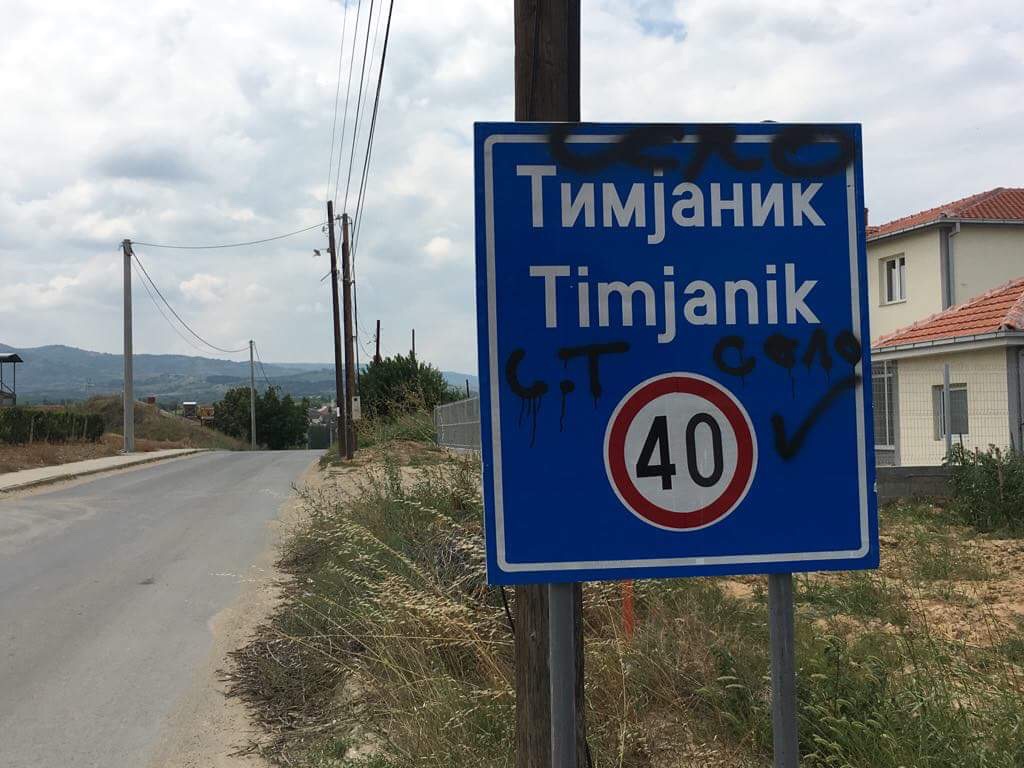
The plan was knocked off script when locals in the town of Timjanik protested  a mayor’s request to accommodate a small group home . When we travelled to Timjanik, along with the minister of social welfare, to find out why, we were confronted with a three hour volley of abuse and hostility from several hundred protesters. There was violence in the air. People watching this back in the capital on live news  were horrified. Urban influencers  began lambasting the protesters as primitive, callous and hillbilly.

But we listened carefully to the protesters. Timjanik was a small town in decline. It could have been in Oklahoma or South Yorkshire. Locals had once been been dependent on industry and agriculture. Abandoned plant a forlorn testimony to that loss.  For generations their income and opportunities had been on a modest, upward trajectory. They feared their children would have a more precarious future and a lower quality of life than the one they had enjoyed. Their list of unfulfilled promises was longer and more depressing than a Radiohead song: unfixed roads, collapsing schools and no pre-school. They longed for  a voice for their plight , alongside all the campaigns that came from the capital for migrants, sexual minorities and people with disability.  Like Antonio, in their own way, they felt abandoned.

But why did these two different forms of deprivation and abandonment compete with each other? Besides humanitarian crisis,  there are three catastrophic burdens in childhood  that drive lifelong inequality:

  1. Discrimination or Exclusion based on race, gender or disability  for example. It creates barriers that exclude one from opportunities, justice and often the basic safety that others take for granted.
  2. Income Poverty through  a lack of the basic means to survive, thrive and access opportunities to reach one’s potential.
  3. Emotional Poverty through the absence of the basic nurturing and protective parental relationships due to violence, neglect or other forms of dysfunctional parenting (also known as childhood adversity). This is often transmitted inter-generationally and unintentionally.

If you look at  Black Lives Matter, Hillbilly Ellergy and Good Will Hunting through the lens of identity, they seem so different to each other. When we look at them through the lens of fairness and dignity for all, they seem the same. It feels like we lost  a sense of ourselves as a whole, we are looking for the differences and barriers. This fragmentation polarises us into differing sides in a counter-productive culture war.

People in places like Timjanik perceive human rights champions  as selective. But human rights are supposed to be universal. Those living with rural and town poverty  feel politically and economically abandoned. They get the bum deal in a painful transition from an industrial to a knowledge economy. This transition has concentrated opportunity in large cities at the expense of  everywhere else. Human rights champions scratch their heads as populists have hoovered up support away from these knowledge economy hubs  . Despite the best intentions, we human rights proponents bear some  responsibility for the growth in populism and polarisation

At an unrelated press conference the day after our visit, a journalist asked the Minister and I about  Timjanik. We were expected to echo public condemnation of the protesters behaviour. Instead we articulated their local grievances  with empathy and said we  understood why they protested though did not agree with them.

Within two hours our inboxes were flowing with warm messages from  Timjanik. They had never expected to be listened to  or for their story to be relayed across news channels. They  needed to be acknowledged and heard. To understand that we think they matter too. From a collective refusal to host the small group home just 24 hours prior, it was now back on.

From that moment on, we numerically balanced our public facing advocacy. We gave equal attention to the situation of the overall population and to those living with one or more of the three catastrophic burdens . If we did a public event on exclusion of Roma minority or children with disability one month, we made sure we also had an event on poverty or a  population-wide issue like education or health the next. This struck us as fair, just and effective and rebuilt public ownership of human rights as a universal principle.

A few weeks after the protest, the government agreed a strategy to transfer all children out of large scale institutions through family re-unification, foster care and small group homes. The strategy “Timjanik” in testimony to what we had all learnt from those events.

On October 15th last year, the last remaining children were removed from large scale institutions. The situation has improved for children in state care in North Macedonia, but there is still so much to do to prevent exclusion, poverty and adversity in the lives of children the world over. We can only do this when everyone finds their place in a shared story of universal,and not selective, human rights. We need to “re-universalize” our human rights story.

And the child in the story? Antonio is out of the cot, living in a small group home with adequate care and stimulation and for the first time in his life, he is enrolled in school. Today in Timjanik, the locals visit with cakes and play with the children at the small group home.  Just ordinary people in an ordinary place with the extraordinary courage to reimagine a better tomorrow in a world that protects all of our dignity.

COVID-19, Violence & The Need To Act with Urgency

Amidst the fear and uncertainty of the Covid19 lockdown in China, 26 year old Lele experienced something more terrifying than the virus itself. Her husband fashioned a weapon from a kitchen stool and beat her semi-conscious as she held her 11 month old baby in her arms. There was nowhere to go, no services to support, no possibility to flee. She had to spend several more weeks with her abuser before she could reach safety.

On the other side of the world in Greenland, the capital city banned alcohol sales to prevent growing child abuse during lockdown. In India the were 92,000 calls to a child abuse helpline in the first 11 days of lockdown. France experienced a 34% increase in abuse helpline calls by children and an even bigger increase in the number of peers and school mates calling on behalf of friends. . As closed schools and stay at home orders spread, so did the risk of abuse.This pattern played out across the world, in three ways:

The first is the way that lockdown piles pressure on households . Even the calmest, securely attached and ‘child development-aware’ parents are being tested by ‘pandemic-parenting’. Often they are working in uncertain jobs while teaching ‘cabin fever kids’ while adapting to loss of space and privacy. But most will not suddenly become abusive or neglectful. In more volatile families however, this stress can spill over into violence or exacerbate existing abuse patterns. The biggest beneficiaries of #StayAtHome are the serial abusers who practice coercive control and other forms of psychological aggression. the lockdown increase the likelihood of adverse childhood experiences.

Secondly, the means of reporting severe child abuse or neglect have been dramatically reduced. According to the US Department of Health & Human Services child protection interventions are initiated by reports from teachers, social workers or nurses. Social distancing measures have reduced reporting. From the 1980s onwards increased reporting of family violence was a major mark of success and progress in protecting the rights of women and children. Momentarily, reporting is in decline.

The third issue, is complex but equally serious. In normal circumstances less than 1 or 2 % of children are subject to interventions by social workers. Yet Adverse Childhood Experience (ACE) research across populations suggests between 15 and 20% of children are affected by chronic, multiple forms of abuse, neglect or dysfunctional parenting at home. This 15 to 20% of children are now in a state of isolation. Children have a biological imperative to have protective, soothing relationships with an adult and are simply not built to be isolated. When a positive relationship at home is absent, the child interprets it at risk. It over-activates their stress response system which wreaks havoc on all aspects of healthy development. Unaddressed it can lead to catastrophic health and wellbeing outcomes throughout life. But when the stress is buffered and soothed by a healthy relationship with a teacher, grandparent or friend and the child is made to feel they matter on an individual level-then the recovery can begin. Right now around the world, hundreds of millions of children have been cut off from those relationships.

This is deeply distressing. Accounts of childhood maltreatment often recall a despairing loneliness and unbearable slowness. Loneliness when the parent who should soothe the pain, is actually the source of that pain. Slowness during long pauses of waiting for a violent outburst or scarce moments of maybe feeling loved. The isolation of the pandemic amplifies this pain exponentially. It is malleable with no end in sight. Relationships with teachers, grandparents and friends were cut off suddenly with no date for restoration.

We need to act with urgency on all three issues. Governments and communities could appoint ministers or local leaders to coordinate child wellbeing during lockdown. A priority must be engagement with parents on managing stress, home schooling and positive discipline, tailored to lockdown conditions. Online and media platforms could be adapted to facilitate a conversation with families and disseminate pandemic-specific parenting tips, similar to the global UNICEF parenting hub. Social protection and housing support must be adapted to reduce the stress on vulnerable families. Behavioural insights and technology innovations should be used to understand how we can best support parents and protect children.

Expanded helplines and channels that enable neighbours and friends to report maltreatment anonymously need to be provided . Equally we need to encourage extended family and friends to maintain regular communication with children in lockdown with abusive or neglectful parents. One of the most moving stories of the pandemic so far is the upsurge in calls by friends of victims reporting maltreatment in France.

Innovation and adaptation could help teachers and social workers restore normal levels of communication with children, despite lockdown. If they are not giving lessons, can they call each child for five minutes? These measures need to be population-wide and not just targeted to 1-2% of children who are child protection cases.

Decades ago, it became normal to ensure every child was immunised against deadly disease with a vaccine. In the future we could hope for a world were every child is buffeted from trauma by a calm and predictable adult connection. A world in which we improve prospects for parenting in every family at the earliest possible stage and maltreatment is managed and prevented as a part of routine public health . All we can do now is demand protection for Lele, her baby and millions of abused children and women locked down, unreported and isolated around the world as part of our immediate and shared struggle to defeat Covid19


Reasons to be Humble

It is humbling to work on global health and humanitarian communications in this moment. The vastness and vulnerability of the human race are breathtaking in equal measure. Talking with people in Nairobi, Geneva or Bangkok on how Covid19 could quickly collapse a fragile health system in a conflict zone or disrupt a medical supply chain on one continent causing a deadly drug shortage on another. Consulting on strategies for incentivising rebellious European teens to stay at home or to help impoverished children in low income countries stay safe without soap and water. Even the uncertainty of where we are heading. We are all vulnerable, in different, but equal ways. There is no ‘us and them’ this time.

People in Liverpool, Lagos and Laos are all social distancing and uber- handwashing as the virus wafts right across isolationist and nativist barriers. The nationalist orientations of just yesterday seem small and redundant today. We are on a war footing with a deadly enemy, but Covid19 is not an ethnic or ideological foe. Like all living things it simply wants to reproduce. We cannot counter it with an alternative ideology. We need the two things that populism seeks to diminish: science and international collaboration. A solution found in one country or more, will become a solution for all countries everywhere.

I have been lucky to work alongside epidemiologists in large scale humanitarian responses, but never on this scale. Public health, along with universal education and social protection, are amongst the UN’s basic international human rights tenets. In disaster and war, maintaining public health is a recognised humanitarian principle. Good public health is when societies improve health outcomes for all: reduced child mortality, non-communicable disease and longer life expectancy. It is also our first line of defence against a deadly enemy like Covid19.

The global child survival revolution of previous WHO/UNICEF and public health generations dramatically reduced child mortality by attacking disease transmission. For the first time in history, major childhood diseases were stopped in their tracks. This occurred through herd immunity via mass immunisation and access to clean water and sanitation. Vaccines, clean water and Sanitation transformed our world beyond recognition and still stop more deaths than any invention since. This is the reality that many of our societies have come to take for granted for the past few decades. Until now.

Pandemics recede when the basic reproduction rate drops way below one. This is the average number of people someone with the disease will infect. The current basic reproduction rate for Covid19 is estimated at between 2 and 2.5. It is much more infectious than regular flu which has a reproduction rate of 1.3, but much less infectious than measles with a rate of up to 18.

Without vaccines or herd immunity for Covid 19, we need other means of reducing transmission. Mass testing and then isolating and caring for cases is our primary form of attack. Social distancing and rigorous hand washing are the best defensive assets we have. Often these public measures are challenging as recent politics has shrunk space and trust for public intervention. We need to rebuild it to defeat Covid19. In doing so we can build a more cohesive society, as many places did after the second world war. This is up to us.

I have seen children die in countries where herd immunity and vaccine confidence has dipped following a concerted anti-vaccination campaign . The Covid19 crisis is only a very moderate version of where they would take us. The anti-vaxxers and their friends would unravel decades of progress on the major childhood diseases and leave our children exposed to something much worse than Covid19. Deadly diseases, including measles, with a basic reproduction rate of between 5 and 18.

One example is Polio. Only two generations ago Polio was every parents worst fear. The paralysing, life changing and often deadly disease has a reproduction rate of between 5 and 7. In 1955 Jonas Salk, a virologist from a working class, Jewish migrant family in the Bronx became a global hero when he found a Polio vaccine.

Just 60 days into Covid19, we already have a vaccine being trialled. This is unprecedented and would never have happened if countries had not put the genetic sequences out in public. It will probably be a multi-national team of Jonas Salks who will deliver the final vaccine to defeat Covid19.

Mostly now we are seeing the best of ourselves. We can see that the values that have recently stripped employment rights, public services, science and international collaboration to the bare bones are flimsy and reckless. We can see that wealth makes you no less dependent on the at-risk front-line health worker or low-paid food delivery person. It is a humbling time indeed. Maybe that humility will help us regroup, rethink and defeat Covid 19. And then build a better tomorrow.

.