Ending the Play Gap

A Personal Reflection on the first ever International Day of Play

Several years ago, I was about to go to a child development forum, when an upbeat organiser called and asked:

“Could you send us a photo of you as a child and a paragraph about a childhood play memory? And by the way, to get everyone energised we will be having some playful activities for delegates.”

My stomach turned. I had no childhood photos, few memories of play and forced playfulness as an adult seemed terrifying.

More recently, as an expectant Dad, I read a book chapter on play by UK psychotherapist and author Philippa Perry.  She recounted asking a family friend why he left the room whenever board games were suggested. He described the inconsolable memories of a playless, and perhaps loveless childhood. He had never really learned to play and now it made him feel awkward and shameful. Perry used the story to illustrate a challenge for many parents. If you didn’t learn how to play as a child, how do you play with your own child? I had never verbalised or thought consciously about my own play-phobia, until this moment.

Play is an obvious biological imperative for every child. It is the foundation of our ability to learn and to build the relational skills needed for love, friendship and even healing from pain. Feeling safe and loved at home provides the secure base necessary to explore and play. Child trauma short-circuits play with another biological imperative, survival. You cannot really play in survival mode. Thus, the children who need the healing and learning power of play the most, are least likely to get it. This deficit diminishes their prospects of thriving throughout life. I call this the play gap.

Many more children than we think live on the wrong side of the play gap.

57% of adults surveyed across 37 diverse countries reported one adverse childhood experience such as physical abuse, emotional neglect, or parental addiction in childhood and 13% experienced four or more. Over 400 million children live in war zones, 160 million children are forced into child labour and 650 million girls married before the age of 18. There is no place on earth untouched by the play gap.

Play is under threat for all children as play opportunities are increasingly squeezed out of childhood everywhere. Children today are 62% less likely to play out than baby boomer grandparents. Jonathan Haidt recently highlighted in Anxious Generation, how a culture of ‘safetyism’, stopping parents allowing children to play outside, combined with a shift from play-based to smartphone-based childhoods harms mental health. Urbanisation, climate change and pollution put public play-spaces out of reach and many children around the world spend almost no time in free-play or outdoors.

Our failure to protect play harms global progress, particularly in education. Over half of children in middle-and-low-income countries are in school but not learning much. Research shows play-based content inspires children’s motivation-to-learn and learning outcomes, much more effectively than teacher-centred instructional learning. But there is little time for play in most curricula. Even in wealthy countries, play is overlooked in a culture of over-testing and exams. Play-based early childhood education is a known turbo-booster for learning outcomes throughout childhood. Yet the poorest half of 3–6-year-olds cannot get a place in pre-school which, in turn drives intergenerational poverty and inhibits long-term economic growth.

June 11th marks the first ever International Day of Play here at the United Nations in New York, and around the world. It is a moment to acknowledge play as a vital sign that children are safe, loved and learning. The play gap is not insurmountable. We are the first generation in history with the knowledge and resources to end the play gap and three simple affordable policies can help governments lead the way.

  1. Make parenting programmes that are proven to promote secure attachment, nurturing care, and playful parenting available for every family.
  2. Ensure every child between three and six has a free place in early childhood education and is learning through play.
  3. Protect all public play space from urbanisation, environmental hazard, and conflict.

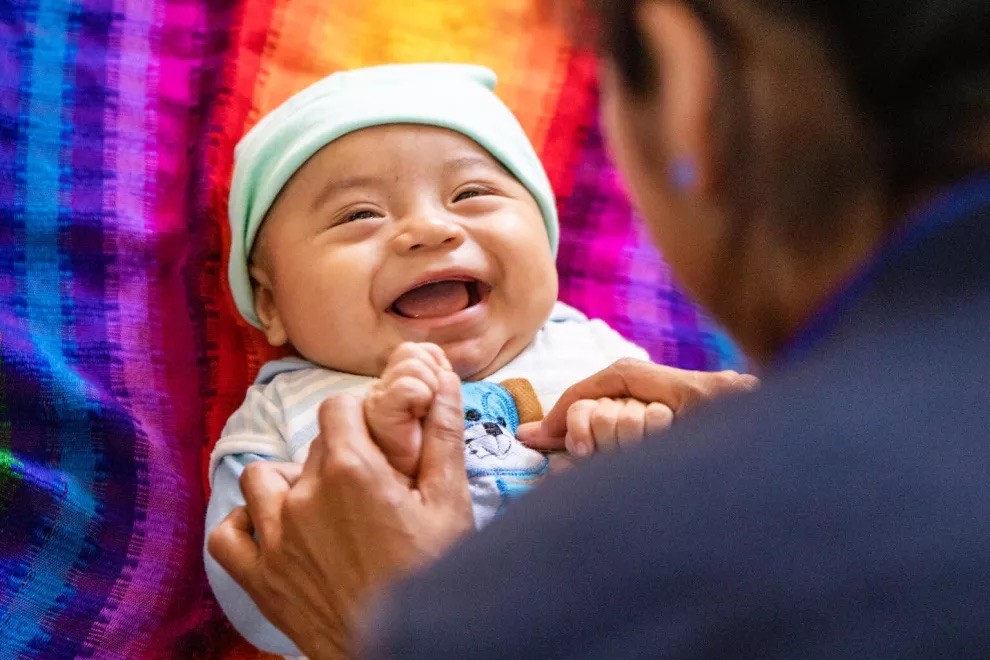
Just before writing this, I watched our toddler chase a half-deflated balloon around the living room, through the kitchen and into the garden. Giggling and babbling, he was utterly in flow, learning about motion and gravity, cause and effect, and discovering agency to move through the world around him. It was pure play in the context of love and safety. I started chasing him, chasing the balloon and the whole space was full of laughter. Learning to play as a parent is healing and takes you places you never imagined existed. It feels like a quiet victory over a childhood shaped by family trauma, orphanages, and gangs. The cycle is broken, play prevails and this June 11th I will be imagining a world where we ensure the right to play for every child, everywhere.

My first book will be published in December: Trauma Proof by Benjamin Perks | Waterstones


Photo credit @ UNICEF/UN0642776/Willocq

Life Without School

21st March 2002, Afghan New Year, was the most humbling and memorable day of my working life. I was coordinating a “Back To School” campaign in Northern Afghanistan, and the 21st was the target date for opening of schools. This was the first major national reform after after a post-Taliban peace agreement signed a few months earlier. Rebuilding education was seen as a peace dividend for the Afghan people and a symbol of hope for their children on the first day of the first peaceful Spring after 23 years of war.

In this case, Back To School was a slightly misleading campaign title. There had never been more than 10% of children in school in Afghan history. If large numbers of children did go, they wouldn’t be going “back” to school. Most would be going for the very first time and would be the first in their families ever to attend school.

We worked for the preceding 60 days in one of the biggest logistical operations in UN history with the aim of creating an improvised national school system. Millions of classroom tents, text books and school backpacks were delivered via air. We distributed them to makeshift schools across the country, often via donkey or camel train. Many villages were not accessible by road or the routes had been badly war-damaged. A teaching workforce was built mainly from scratch by training anyone with a high school diploma on the basics of teaching. Schools were established in tents, fields, houses and former factories. In some cases. deadly land mines had to be cleared first. The campaign was intense, rapid and exhausting, but at 4 am on the the 21st March we put the final pin in a map. It showed every community in our zone had a designated school space, a teacher and supplies.

Just a few hours later we woke up to see the streets full of children hurrying in different directions to their first ever class. A total of 3 million children went to school that day. Seeing this was indescribable. It wasn’t just about learning. We knew that hungry children would receive lunch, traumatised and neglected children would receive attention, acknowledgement and maybe a sense of belonging. We knew that if children learned to read and write in school today, they would be less likely to die while giving birth or through preventable disease tomorrow. School connected those children to an enchanted world of learning. More than that, it is an accelerator for every other aspect of healthy child development and wellbeing.

The absence of education was a severe deprivation that the Afghan people yearned to overcome, for their children and their future. Similar struggles in different parts of the world have dramatically increased school access. Prior to the pandemic, 91% of the world’s schools age children were enrolled. This was unimaginable a few decades ago.

Todays school closures, affecting some 1.3 billion children globally, have momentarily reversed these gains. They affect all children, but have harmed the most vulnerable in three devastating and potentially life-lasting ways that :

  1. School closures exacerbate existing inequalities of access, quality and attainment for the poorest and most vulnerable children everywhere. Hard fought gains in attendance and access for female, Roma, indigenous or other excluded groups are under threat. Attention and resources risk being diverted away from a pre-covid learning crisis where half of the world’s children are in school but not really learning. Remote learning remains deeply unequal. Here in New York the 300,000 children who don’t have digital access are the poorest and already blighted by the lowest attainment and opportunities in the education system.
  2. 370 million of the worlds poorest children are missing out on vital school meals. These are children at risk of malnutrition and depend on school feeding programmes for basic health. Further to this, school is often a key community centre for monitoring overall child health. Health or nutrition deficits in childhood are not momentary, they impact development with life-lasting costs. School closures are a threat to the health and nutritional status of children
  3. At least 20% of children in any given society are affected by multiple forms of neglect, abuse and dysfunctional parenting at home. Only a fraction of them become child protection cases with dedicated and active social work support. For the rest, a soothing relationship with a teacher and school friends that can help them find a pathway to a better future and rebuild self belief. These relationships have been cut off with school closures. We know that unaddressed trauma in childhood is a major driver of poor mental and physical health throughout life and worse outcomes on almost every wellbeing measure.

The safe reopening of schools needs to be an urgent priority for governments everywhere. Remote learning is only a good alternative when schools are closed as a last resort. But as the UK Commissioner for Children Anne Longfield recently pointed out schools must be the last public space to close and the first to open. When there is a possibility to ease social distancing measures, it should be schools first not pubs!

It is a realistic proposition in the 21st century to set a target of connecting every child, every where to digital learning. This makes school systems more resilient to shocks and it can also network kids into public health and social work systems when direct access is not possible. Furthermore, the current digital gap is one of the major determinants of learning inequality. This needs huge innovation and investment, but it is achievable.

As much as disruption to schooling threatens our economic recovery, it also harms social fabric. Prior to the pandemic we were more atomised, polarised and lonely than ever, amidst an onslaught of identity conflict and receding communal values. School is the one place where children are socialised together and with common purpose and expectations. It is our great hope for healing, for binding and for belonging. Along with public health and social insurance, our educations systems are an endeavour that has propelled our societies forward and helped us to flourish. The longer they remain closed, the more difficult it is to narrow the gaps on quality, access and attainment and the wounds inflicted on children affected by poverty, exclusion or trauma. Thats why we need to prioritise the reopening of schools above all else.